

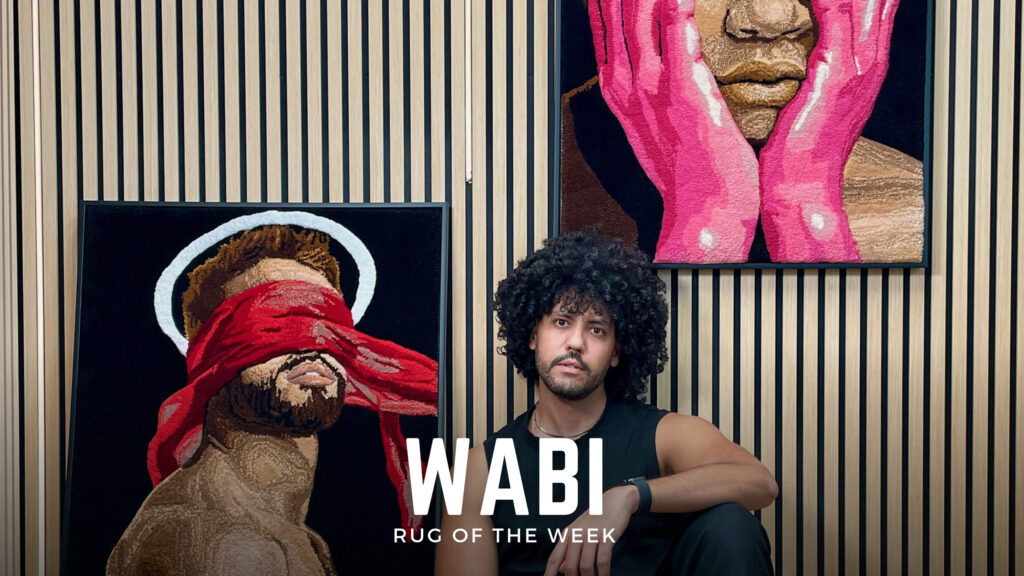
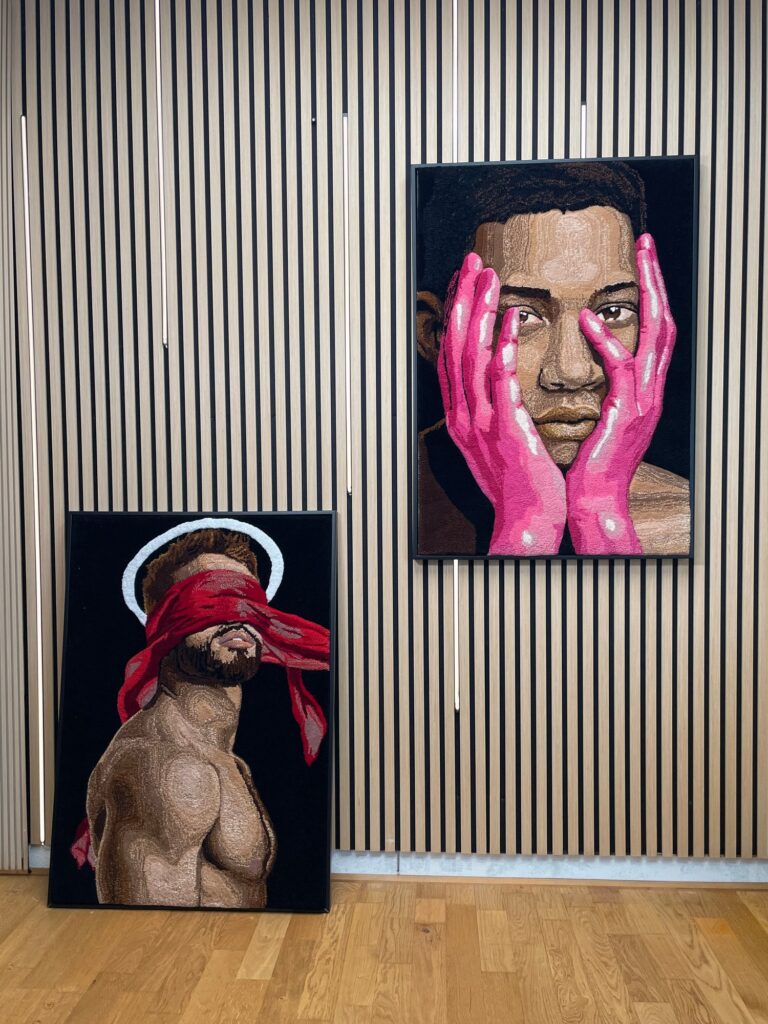
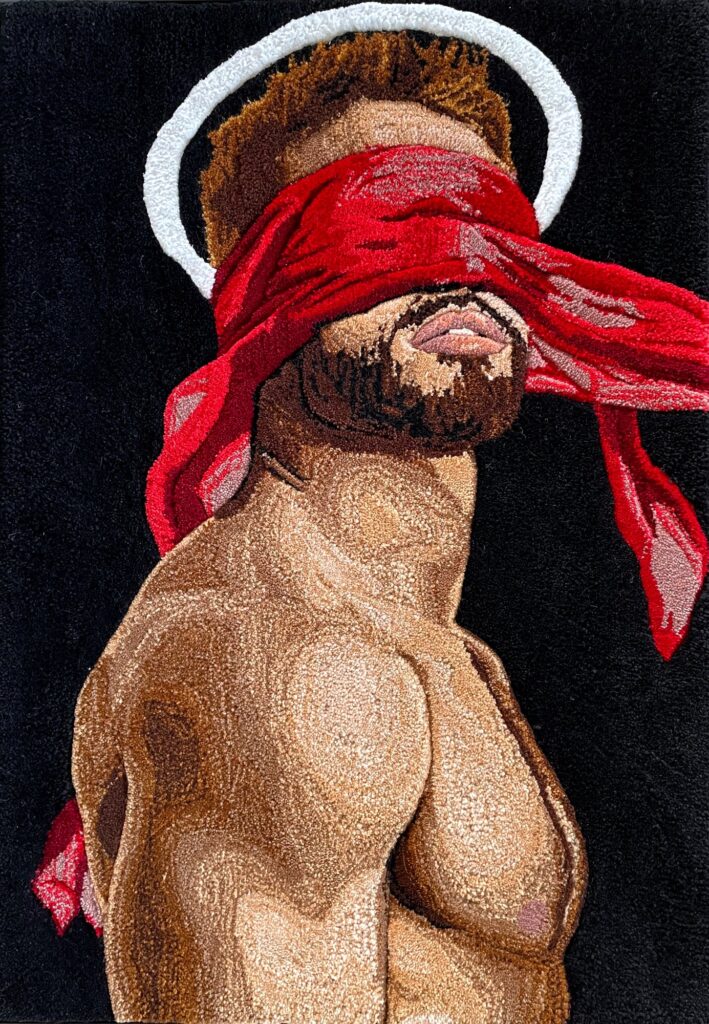
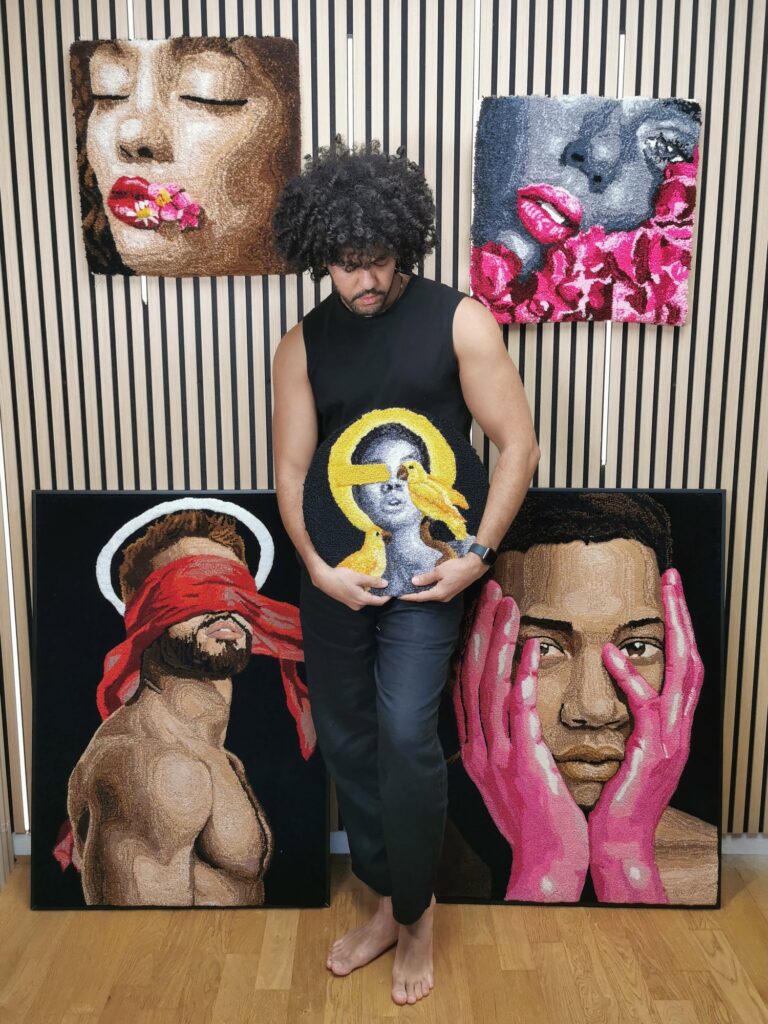
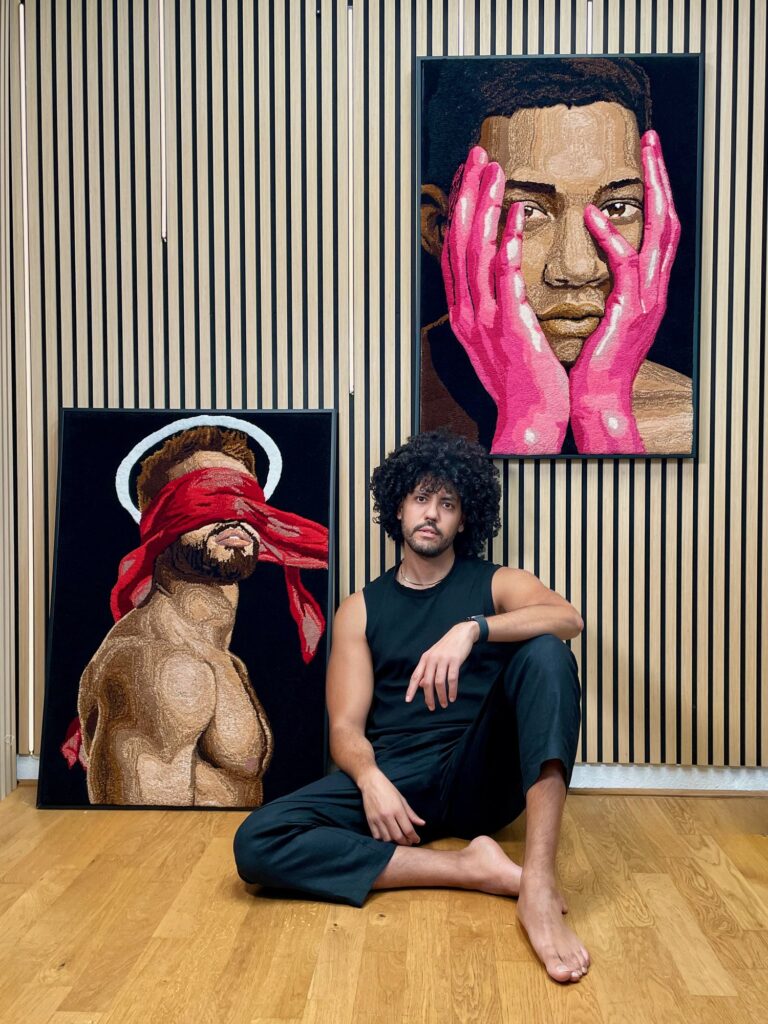
One face hides behind a red blindfold under a glowing halo. The other is framed by bright pink hands, and both were made by Wahbi Walhezi, known as Wabi, of Wabi Art Studio, as a pair about hiding and being seen.
Wabi is a Tunisian-German textile artist based in Ulm, Germany. For almost 20 years he studied and worked as a software engineer, until he quit his job in January 2025 to tuft full time. Today he makes portraits from wool and teaches tufting and punch needle workshops in Ulm and Neu-Ulm.
Quick facts
- Maker: Wahbi Walhezi (Wabi), Wabi Art Studio (@wabi_art_studio)
- Location: Ulm, Germany
- Size: 70 x 100 cm each
- Making time: About 40 hours per portrait
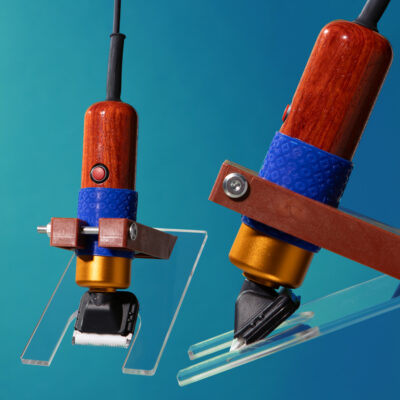
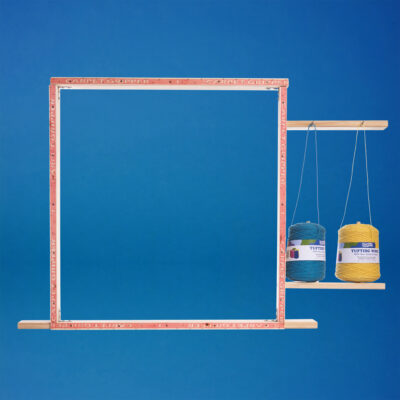
- Tools: AK-V tufting gun, cut and loop pile
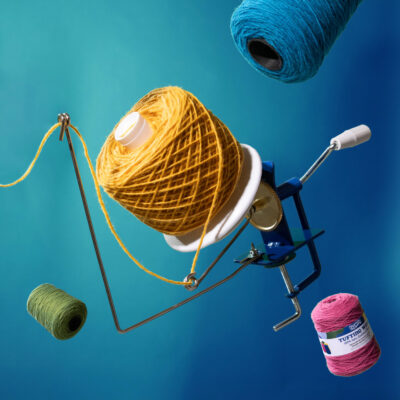
- Materials: 100% New Zealand wool, with glow-in-the-dark yarn for the halo
From the keyboard back to making
As a kid, Wabi was always making something: calligraphy, decorations, little sewn hearts for family and friends. Then came engineering school, and the making stopped. In 2022 he picked up a punch needle to calm his overthinking. During the fall of 2023, a tufting video came up on TikTok. He wanted something faster than punch needle so he could go bigger, and in April 2024 he bought his own tufting gun.
“When the gun is running, my head stops racing. There’s only the next line and the next color.”
Two faces, one feeling
“A face is the hardest thing to get right in yarn, and nothing beats the moment it finally looks back at you,” he says. These two portraits started with a feeling he knows well: “For years I showed people a safer version of myself.” Switching from engineering to art meant finally letting people see the real him. “One portrait is still hiding. The other has decided to be seen.”
Matching skin tones with protanomaly
Real skin is dozens of pale, dark, warm and cool shades overlapping. Wabi has protanomaly: his red photoreceptor cells don’t work at 100%. Bold colours are easy, but pale shades that sit close together blur into one. So where colour is bold, he trusts his eyes. Where it is soft, he follows three steps: work from the yarn’s colour codes, check each shade with a digital colour picker, then test, step back and test again.
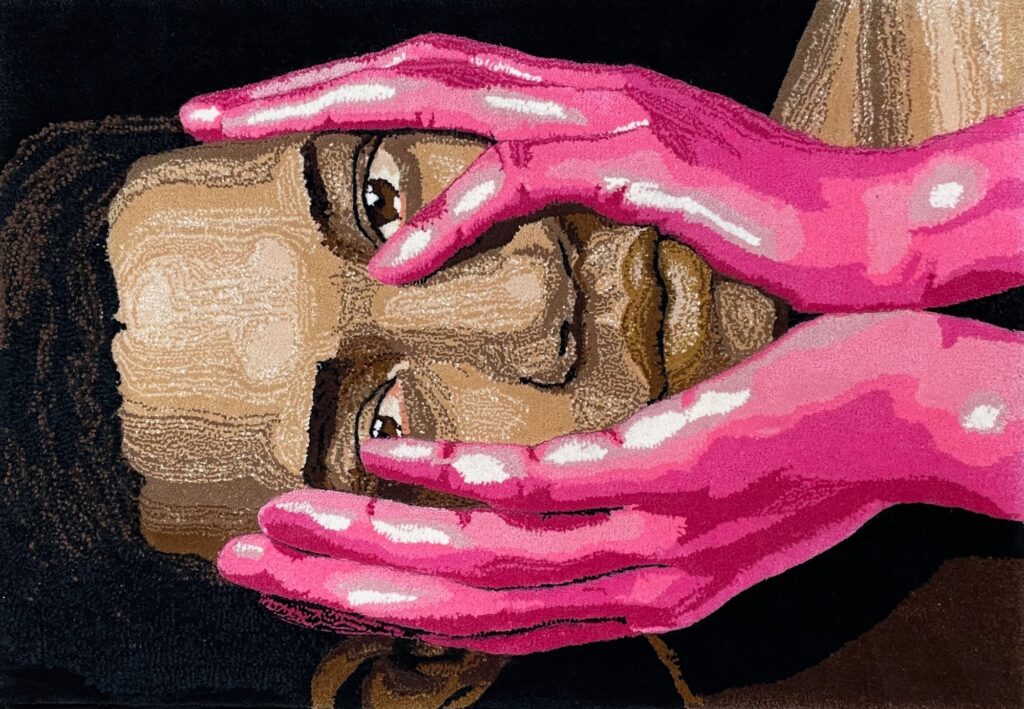
Halfway through, the face often looks flat and doubt gets loud. His rule: never decide at night. He takes a photo, walks away and checks the shades the next day. Usually it is one wrong shade, and a few loops out and in bring the face back to life.
After tufting he carves and shears the wool, so a face isn’t flat. Our carving guide shows how that adds depth. Next time, he would build and test the full skin-tone palette before the first loop.
Start small, finish something
Both portraits were shown at NeonBazaar in Stuttgart in the exhibition DO NOT DISTURB: Offline Essentials (2026).
“If you’re at a desk job and still dream about making things with your hands: I was too, for almost 20 years. Start small. Finish something. See where it takes you.”
Follow Wabi’s work on Instagram at @wabi_art_studio.


Enjoyed this story? See all Rugs of the Week. Want to be featured? Submit your rug.


Wabi’s Wool Portraits About Hiding and Being Seen
Off The Frame: what you made, October 2026
Off The Frame: what you made, September 2026
Wool vs Polyester for Tufting – which yarn should you use?
Introducing Ultra-Vivid: Polyester Tufting Yarn
Creating Fluffy, High-Pile Contrast in Your Rugs
How Much Yarn Do I Need for My Tufting Project?
How Much Yarn Do You Need for Tufting Workshops?