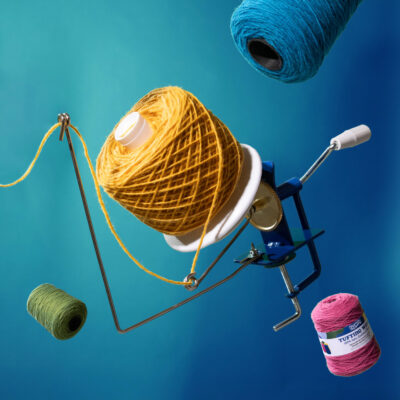


Tufting is much easier when the yarn can run freely into the gun. A tight skein, a tangled cone or a hidden knot will make the machine struggle, beep, or drop the yarn from the needle. A yarn winder turns a skein or a large cone into a compact cake that you can pull from the inside.
This is also the moment to find and deal with knots, before they reach the needle.
What you need
- A yarn winder, clamped to a sturdy table
- The skein or cone you want to wind
- A little space next to the winder for the yarn to feed from
Our winder is made for tufting yarn and mounts to a table. If you are choosing yarn rather than winding it, see wool versus polyester and our yarn range.
How to wind a cake
- Clamp the winder. Fix it to a square table edge so it cannot wobble. A folded cloth between the clamp and the table will protect the surface.
- Find the end of the yarn and pass it through the yarn guide on the winder.
- Anchor the end in the groove of the cone, so it does not slip when you start to turn.
- Turn the handle to the right (clockwise) at a steady pace. Do not rush. A fast, jerky wind is what throws the yarn off the guide and starts a tangle.
- Watch the tension and look for knots. If the yarn starts to resist, or jumps out of the guide, slow down and smooth it out before you carry on. Near the end of a skein this is especially common. If you find a knot, stop, undo or cut it out, and join the yarn cleanly. A knot that goes into the tufting gun can jam the needle or the scissors.
- Finish slowly. When the skein is wound, lift the cake off the cone. The working end should come from the inside of the cake, which is what you want when you feed the gun.
Feeding the gun from the cake
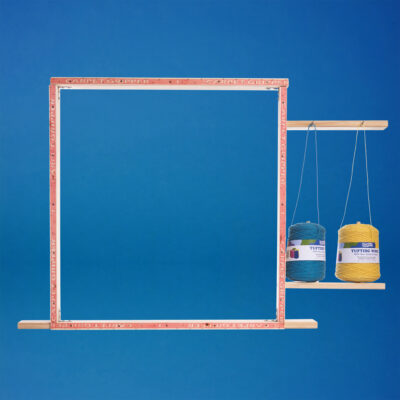
Place the cake so the yarn can rise freely to the gun without dragging across the frame or catching on the machine. A yarn that snags on the way in is a common reason for beeping and for stitches that will not stay in the needle. If the yarn itself is running freely but still will not stay in, adjust the needle hole rather than winding tighter.
For how many strands to use and how to tuft an even line, see the technique basics.