


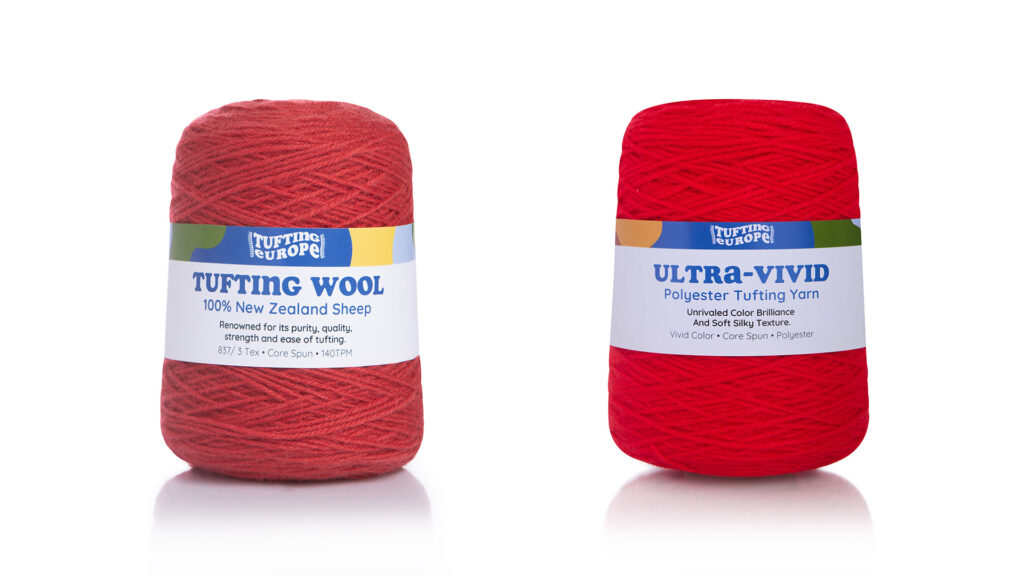
The yarn you choose affects your rug’s durability, appearance, and feel. Wool and polyester are both strong choices for tufting, and the right one depends on what you’re making and what matters most to you.
Quick answer: choose wool for natural texture and character. Choose polyester for the most vivid colour range and a soft, plush finish. Both hold up well on the floor, not just on the wall.
At a glance
| Wool | Polyester | |
|---|---|---|
| Fibre | Natural | Synthetic |
| Colour vibrancy | Natural, more muted tones | Highly vivid and saturated |
| Feel | Textured, natural hand | Soft, silky (core spun) |
| Durability underfoot | Holds shape well over time | Resists crushing, bounces back |
| Shedding / pilling | Minimal | Minimal |
| Allergies | Can trigger wool sensitivity | Allergy-friendly |
| Colour range | Naturally-inspired shades | 60 vivid shades (Ultra-Vivid) |
Wool: natural character
Our Wool tufting yarn is a natural, renewable fibre with a texture and depth that synthetic yarns don’t quite replicate. It holds its shape well under repeated foot traffic, which is why it remains a strong choice for floor rugs. Some people are sensitive to wool, which is worth bearing in mind if a rug will be used or sold across different households.
Polyester: vivid and versatile
Our Polyester tufting yarn has a smoother fibre surface reflects light more directly than wool, which gives colour a noticeably more vivid, saturated look. Our Ultra-Vivid range is core spun (a strong core wrapped in soft outer fibres), which gives it a soft, silky feel without giving up resilience: it resists crushing well, so pile bounces back under regular use, and it’s less prone to shedding and pilling. It’s also a straightforward, allergy-friendly alternative to wool.
Which should you choose?
Neither is a compromise choice; they’re two different materials suited to different creative goals.
Choose wool if:
- You want a natural fibre with its own texture and character as part of the design.
- You’re making a rug where a more organic, earthy palette fits the piece.
- Natural materials matter to you or your customer, regardless of synthetic alternatives.
Choose polyester if:
- Your design relies on bold, highly saturated colour, especially side by side with other bright tones.
- You or the end user has a wool sensitivity.
- You want the softest possible pile underfoot or to the touch.
- You’re working across a large colour palette and want consistent vividness across every shade, not just some.
Plenty of tufters keep both in their toolkit and pick based on the project in front of them, rather than committing to one material for everything.
Off The Frame: what you made, September 2026
Wool vs Polyester for Tufting – which yarn should you use?
Introducing Ultra-Vivid: Polyester Tufting Yarn
Creating Fluffy, High-Pile Contrast in Your Rugs
How Much Yarn Do I Need for My Tufting Project?
How Much Yarn Do You Need for Tufting Workshops?
Fabio Passeri’s Tibetan Celestial Dragon
TheRugDealer’s Tufted Porsche, Three Years in the Making